Turn Your Layover Into an Unforgettable Ethiopian Experience
PrivateFree cancellation
From $96 per person
Ethiopia keeps its own calendar: twelve months of thirty days, plus a thirteenth of five or six. It runs seven to eight years behind the Gregorian year — eight from 1 January until 10 or 11 September, seven for the rest of the year. New Year falls on 11 September.
This is not a curiosity when you are on a connection. It means the religious holidays land on dates you would not predict, and shops and museums close for them. One traveller arrived on a quiet Ethiopian Easter Sunday without realising, and spent the day looking at closed doors from the outside.
The skeleton in the case at the National Museum of Ethiopia is a plaster cast. The original bones — about 40 per cent of an Australopithecus afarensis female, 3.2 million years old, dug out at Hadar on 24 November 1974 — are kept in the museum's archive.
Nobody hides this and it disappoints nobody once they know. Her Amharic name, Dinkʼinesh, means you are marvellous, and it is a better name than the one the excavation team took from a Beatles song.
Mercato covers several square miles and employs an estimated 13,000 people across 7,100 businesses. It is where it is because the Italian occupation moved the old market west and reserved the original site — renamed Piazza — for Europeans.
Arab traders who had been there relocated half a mile west with it, and local shopkeepers gradually displaced them from the 1960s. The name is simply the Italian word for market, which is the occupation's other quiet legacy.
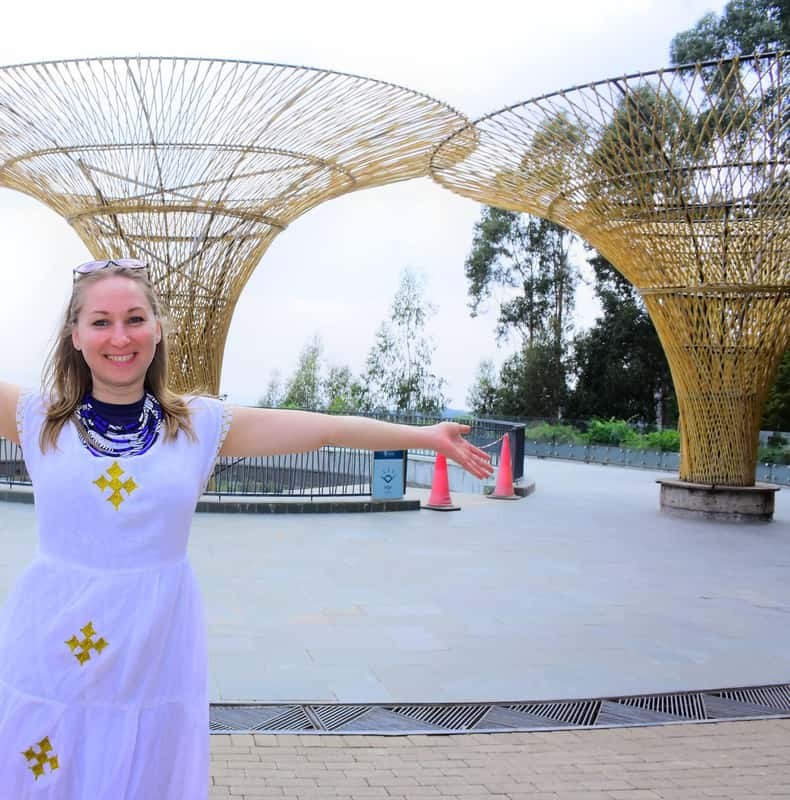
Menelik II imported eucalyptus from Australia during his reign, and it was planted across the Entoto ridge mostly under Haile Selassie. It grows fast, it burns well, and it is why a city at 2,355 metres had fuel at all.
The ridge is now nicknamed the lung of Addis Ababa, which is a strange thing to call a plantation of imported trees, and entirely accurate. You drive up through it on almost every departure out of Bole.
Addis Ababa is the highest capital city in Africa and the fourth highest in the world, at 2,355 metres. Mount Entoto, which most itineraries climb, tops out at 3,200. That is high enough that two operators state altitude limits on their own listings.
Ethiopian timekeeping starts the day at dawn rather than at midnight, so what the rest of the world calls seven in the morning is one o'clock here. Your guide will translate without being asked; a market trader may not.
It rarely causes a practical problem on a guided day, because the operator works from your flight times. It is worth knowing before you try to arrange anything yourself.
Daytime highs run between 20.9°C and 25.8°C in every month of the year, and the annual mean moves by 3.3 degrees. What changes is rain: 27 wet days in July against one in November.
| Wettest | Driest | |
|---|---|---|
| Month | August, 241.8 mm | November, 5.3 mm |
| Wet days | July, 27 | November and December, 1 |
| Sunshine | December, 288 hours | July, 112 hours |
| Daytime high | March, 25.8°C | August, 20.9°C |
The consequence is on the weather page: nothing about what you pack changes with the season, and everything about whether the ridge gives you a view does.
The Ethnological Museum occupies the Gennete Le'ul palace, built in 1934 for Haile Selassie. Rodolfo Graziani took it as his residence during the occupation. On 19 February 1937 two men attempted to kill him there.
In the three days that followed, Italian forces killed Ethiopians in numbers still disputed — a 2017 study puts it near 19,200, about a fifth of the city. The Yekatit 12 obelisk at Sidist Kilo, 28 metres of white stone inaugurated in 1944, marks it, and Holy Trinity Cathedral holds the memorial to the dead. Three itineraries pass all three and almost nobody joins them up.
Addis Ababa was founded in 1886 by Emperor Menelik II and Empress Taytu Betul, on a site chosen for its hot mineral springs. Taytu named it: Addis Ababa is Amharic for new flower. In Oromo the place is Finfinnee, meaning fountain of hot mineral water, which is the older name for the same springs.
It is younger than the Eiffel Tower, and it now holds around 6.29 million people and the headquarters of the African Union. That gap between a very old country and a very new capital is the thing a city tour keeps running into: an empire with a documented history of millennia, governed from a town that is not yet 140 years old, on a ridge where the emperor's own camp is still marked.
On 1 March 1896 an Ethiopian army defeated an Italian one at Adwa, and Ethiopia kept its independence through the whole of the European scramble for Africa. That single fact sits underneath almost everything you will be shown on a city tour.
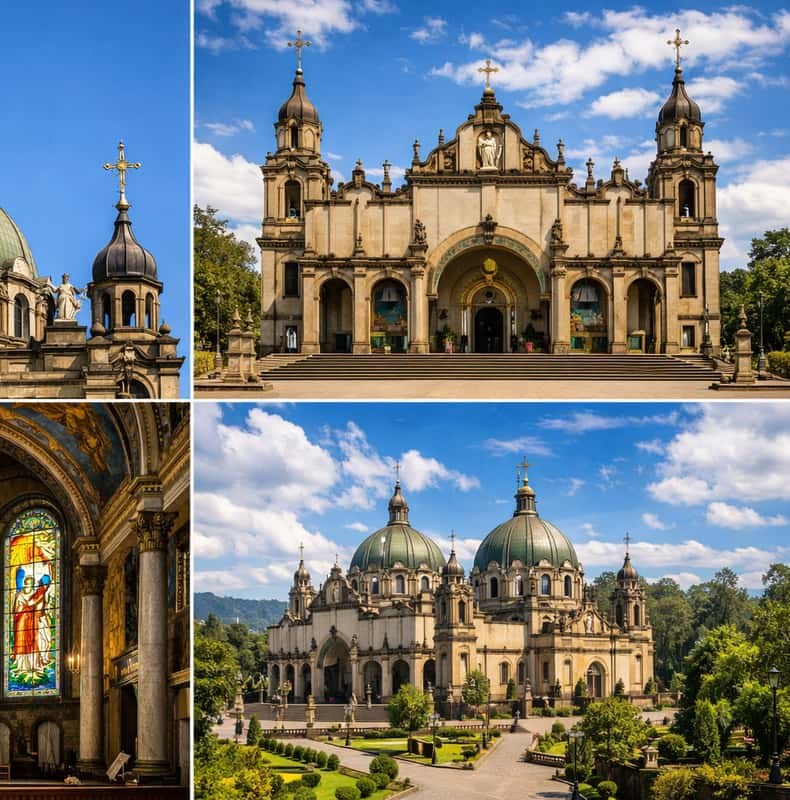
St George's Cathedral is named for the Tabot carried to Adwa. Italy came back in 1936 and held the country until the liberation of 1941, and Holy Trinity Cathedral was completed in 1942 specifically to commemorate the victory over that occupation. Meskel Square, the Lion of Judah and the Yekatit 12 obelisk all belong to the same story, and a guide who tells it turns six landmarks into one afternoon.
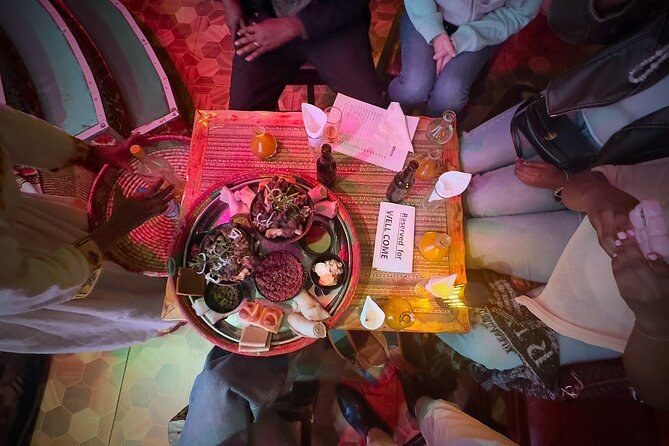
Leaving after the first cup is possible and slightly rude. Allow the hour the itineraries give it, and let the guide explain the grass on the floor while the beans roast.
See them for yourself. The stops behind every fact above are on things to do on a layover, and the departures that visit them are compared on Addis Ababa Layover Tours. You can also browse layover tour in addis ababa.
From $96 per person