Full Day Tour of Addis Ababa with Hotel Pickup and Drop-off
Max 15Free cancellation
From $69 per person
Very little of what you would expect. Daytime highs in Addis Ababa run between 20.9°C and 25.8°C in every month of the year, and the annual mean moves from 15.5°C in December to 18.8°C in April. You pack the same bag in January as in July.
What moves enormously is water and light. July brings 238 mm of rain across 27 days and only 112 hours of sunshine; December brings 7.5 mm across one day and 288 hours. That is the whole seasonal story, and it has exactly one consequence for a layover.
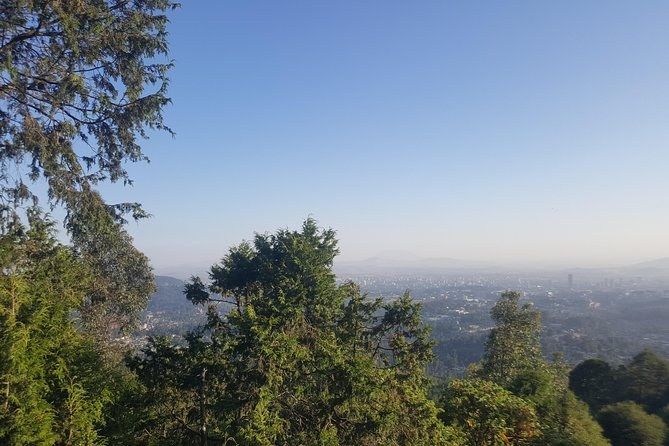
Because Mount Entoto is on almost every itinerary out of Bole, and at 3,200 metres it is high enough to be inside the cloud rather than above it. In a dry month the viewpoint gives you the entire plain. In kiremt it frequently gives you weather.
Nothing else on the standard route cares. Museums, cathedrals, the Ethnological Museum and a coffee ceremony are all indoors, and Mercato is covered enough to work in rain. The season does not decide whether to go; it decides the running order.
The best months, and it is not close. November has one wet day and 267 hours of sun; December has one wet day and 288 hours, the sunniest month of the year. January carries three wet days and 267 hours.
Nights are the coldest of the year at this point — 7.5°C in December — so an early pickup wants a layer. Everything else is as good as it gets: clear mornings, a visible ridge, and green still left over from the rains.
Warm and increasingly wet. March is the warmest month by daytime high at 25.8°C with seven wet days; April brings ten wet days and 91 mm; May ten wet days but 239 hours of sunshine, more than April manages.
The rain here is afternoon rain that clears rather than all-day weather. A morning departure is barely affected. If your connection lands you in the afternoon during these months, ask the operator to run the ridge first.
The long rains, and a genuinely different proposition. June brings 20 wet days, July 27, August 26. Between them July and August account for 480 mm and humidity peaks at 80 per cent. Sunshine falls to 112 hours in July, a third of December's.
This is not a reason to stay in the terminal. It is a reason to book a route weighted towards the museums and the cathedrals, and to treat the viewpoint as a bonus rather than the reason for the day. September improves markedly in its second half.
Four wet days, 248 hours of sun, and a countryside still green from four months of rain. Arguably the single best month to land in Addis Ababa, and almost nobody plans for it because it sits between the two things people have heard of.
If you have any control over when your connection falls, October and November are the months to aim at.
More than the weather does, and it catches people out. Ethiopia keeps twelve months of thirty days plus a thirteenth of five or six, running seven to eight years behind the Gregorian year, with New Year on 11 September.
The practical consequence is that the religious holidays fall on dates you would not predict, and shops and museums close for them. One traveller arrived on a quiet Ethiopian Easter Sunday without knowing, and the guide reshaped the day around what was open. Name your date when you book and the same thing happens for you.
A bigger variable than the month. The National Museum of Ethiopia closes on Mondays and Mercato closes on Sundays, and two independent operators state both on their own listings. One substitutes the ethnographic collection for a Monday booking without shortening the day.
| Landing on | What is shut | What to book instead |
|---|---|---|
| Monday | National Museum of Ethiopia | A route via the Ethnological Museum |
| Sunday | Mercato | A route via the cathedrals and the ridge |
| An Ethiopian feast day | Much of the retail city | A private route, reshaped on the morning |
| Any other day | Nothing | Whatever the weather suggests |
| Months | Wet days | Sunshine | Route to book |
|---|---|---|---|
| November–February | 1–5 | 206–288 h | Ridge first, then the city |
| March–May | 7–10 | 210–242 h | Ridge in the morning, museums after |
| June–September | 18–27 | 112–174 h | Museums and cathedrals, ridge as a bonus |
| October | 4 | 248 h | Anything — the best month of the year |
Most of them, which is the point that gets lost. The National Museum of Ethiopia, the Ethnological Museum, Holy Trinity Cathedral and St George's Cathedral are all indoors and entirely unaffected by 27 wet days. Mercato is covered enough to work in rain, and travellers who go in kiremt describe the same hour as travellers who go in December.
The Ethiopian coffee ceremony is arguably better in the wet season: an hour indoors over a charcoal brazier while it rains outside is a considerably nicer thing than the same hour in March. Only the viewpoint is genuinely at risk, and it is one stop out of five or eight.
It changes the light more than the itinerary. July has 112 hours of sunshine against December's 288, so a kiremt day is grey rather than wet-through, and the city looks different in it — greener, quieter, and with the eucalyptus on the ridge dripping rather than dusty.
Humidity peaks at 80 per cent in August, which at 2,355 metres still means a daytime high of 20.9°C. Nobody is uncomfortable. The one adjustment worth making is to ask for the indoor stops in the afternoon, because that is when the rain arrives in both wet seasons.
Barely. Layers in every month, because mornings start near 8°C and afternoons reach the low twenties, and the ridge always runs colder than the centre. In kiremt add something waterproof; the rest of the year add nothing.
Churches expect shoulders and knees covered in every season, and shoes come off inside some of them. The full list is on visiting Addis Ababa.
Not where you would expect, which is the whole difficulty. Ethiopian New Year is 11 September, or 12 September in the year before a leap year. The other major feasts move against the Gregorian calendar every year, because they are fixed to a calendar that is seven to eight years behind it and structured differently.
What that means in practice is simple: give the operator your date rather than the day of the week, and ask whether anything is closed. On a feast day much of the retail city shuts, the churches fill, and a private departure that can be reshaped on the morning is worth considerably more than a fixed one. One traveller landed on a quiet Ethiopian Easter Sunday without knowing and had the day rebuilt around what was open, which is the good version of that story.
Not really, and that is worth saying because people assume there must be. Mercato runs the same six days a week all year and closes on Sundays regardless of the month. Coffee is the main trade moving through it, and Ethiopia's harvest runs roughly October to December, so the late months carry more of it — but the market is enormous and the difference is not one a visitor would notice.
What does change with the month is how pleasant the walk is. In kiremt the lanes are wet underfoot and closed shoes matter more; in the dry season it is dusty instead. Both are fine, and neither is a reason to move a booking.
Land between October and February and book the ridge. Land between June and September and book the museums. In every other month, take the ridge in the morning and the rest afterwards, and name the day of the week when you book.
The month-by-month figures behind all of it are on the weather page, and every departure is compared with its stop list on Addis Ababa Layover Tours.
Book for the month you land in. The figures are on the weather page, and the departures that suit each season are compared with their stop lists on Addis Ababa Layover Tours.
From $69 per person

From $96 per person